


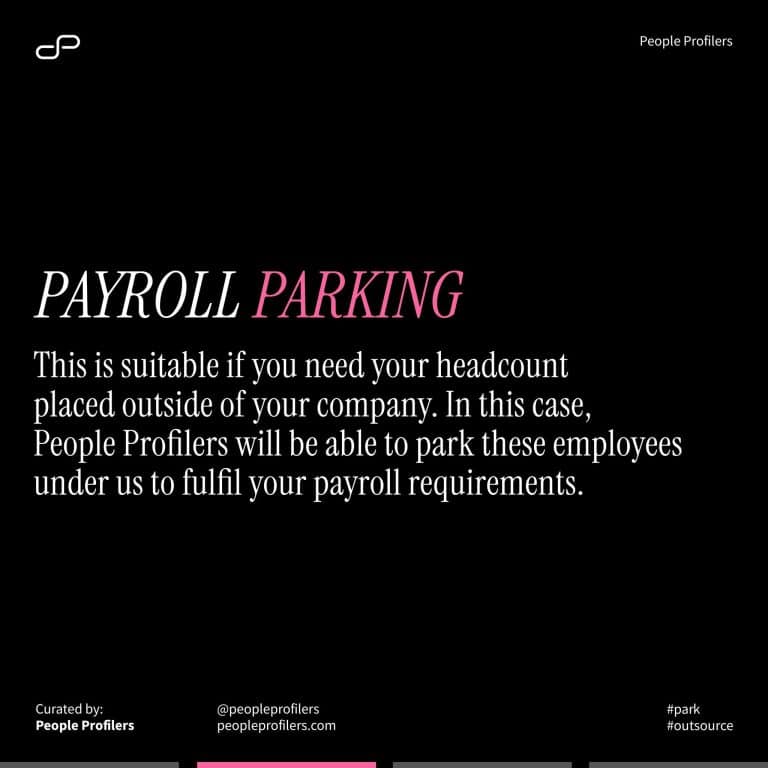
One efficient way to manage your company’s talent and staffing is with Payroll Parking! In Singapore, Payroll Parking utilises Employer of Record (EOR) services to manage HR operations so that management can focus on more critical business functions.
Through Payroll Parking, businesses can utilise the expertise of job recruitment agencies and human resource provides like People Profilers to manage their employees, payroll, CPF contributions, work injury compensation, insurance and benefits administration while also staying up-to-date on the legal and statutory requirements of Singapore’s Employment Act without the need to train and manage their own HR department.
What exactly is Payroll Parking?
Payroll Parking is essentially the outsourcing of your HR operations to a third party entity who serves as your Employer of Record (EOR). As your EOR, this third party entity parks your employee count under their organisation and handles all the paperwork that comes with employing your workforce—processing their pay, disbursing timely CPF contributions and benefits administration, as well as ensuring your employed workforce meets all of the Ministry of Manpower’s employee regulations.
How does Payroll Parking work?
The process typically begins by making an agreement with a third party entity to serve as your Employer of Record. This agreement outlines the terms of the arrangement, including the HR services you would like your EOR to provide, fees, responsibilities, and compliance obligations.
Once the agreement is in place, you will onboard your workers as employees under the Employer of Record. This involves gathering employment contracts, tax forms and identification documents to ensure compliance with MOM’s regulations.
When your employees are officially onboarded, the Employer of Record assumes responsibility for your workforce’s payroll processing. This means calculating wages, processing payments, claims, taxes, CPF contributions and ensuring timely disbursement of salaries accordingly.
In addition to payroll processing, your Employer of Record will also ensure your company is in compliance with MOM’s labour laws, regulations and tax requirements. They are responsible for staying up-to-date on changes in the legislation of the Employment Act, ensuring proper classification of workers and adhering to statutory obligations like minimum wage laws, overtime regulations and employment taxes.
Depending on your agreement with them, they may also handle benefits administration which means enrolling, managing and complying with agreed-upon employee benefits such as health insurance, retirement plans and other perks.
Although the Employer of Record is hired to handle your HR administrative work, you remain in control over your employee’s day-to-day management, supervision and direction of their tasks and work responsibilities.
However, just like any HR department, you can get your Employer of Record to assist with employee relations by resolving disputes, addressing grievances or providing support as needed by including this service in your agreement.
What are the benefits of payroll Parking?
Many companies leverage this agreement to park their employee count under a third party entity, reducing their administrative burdens while ensuring compliance with Singapore’s employment laws, especially if foreign workers are engaged across different jurisdictions.
If you’re looking to expand your business or engage remote workers, Payroll Parking through Employer of Record services provides employers with a streamlined approach to managing compliance and payroll across borders.
By outsourcing payroll and compliance functions to a specialised human resource provider like People Profilers, you mitigate the risk of non-compliance with Singapore’s labour laws, tax regulations and employment standards, reducing potential legal and financial liabilities.
Payroll Parking also frees up valuable time and resources for you to focus on core business activities such as innovation, growth strategies, customer service for improved efficiency and productivity.
Furthermore, your employees benefit from timely and accurate payroll processing, ensuring they receive their wages on time without delays or errors. Depending on your arrangement with the Employer of Record, your employees may also gain access to a range of benefits and perks such as health insurance, work injury compensation and other employee benefits that will enhance their job satisfaction and financial security.
Interested in streamlining your company’s HR operations and mitigating compliance risks with specialists who are experienced in the complexities of today’s workforce landscape? Contact People Profilers and Payroll Park your employees under us today!
Click here to learn more about People Profilers’ EOR/Payroll Parking Service.